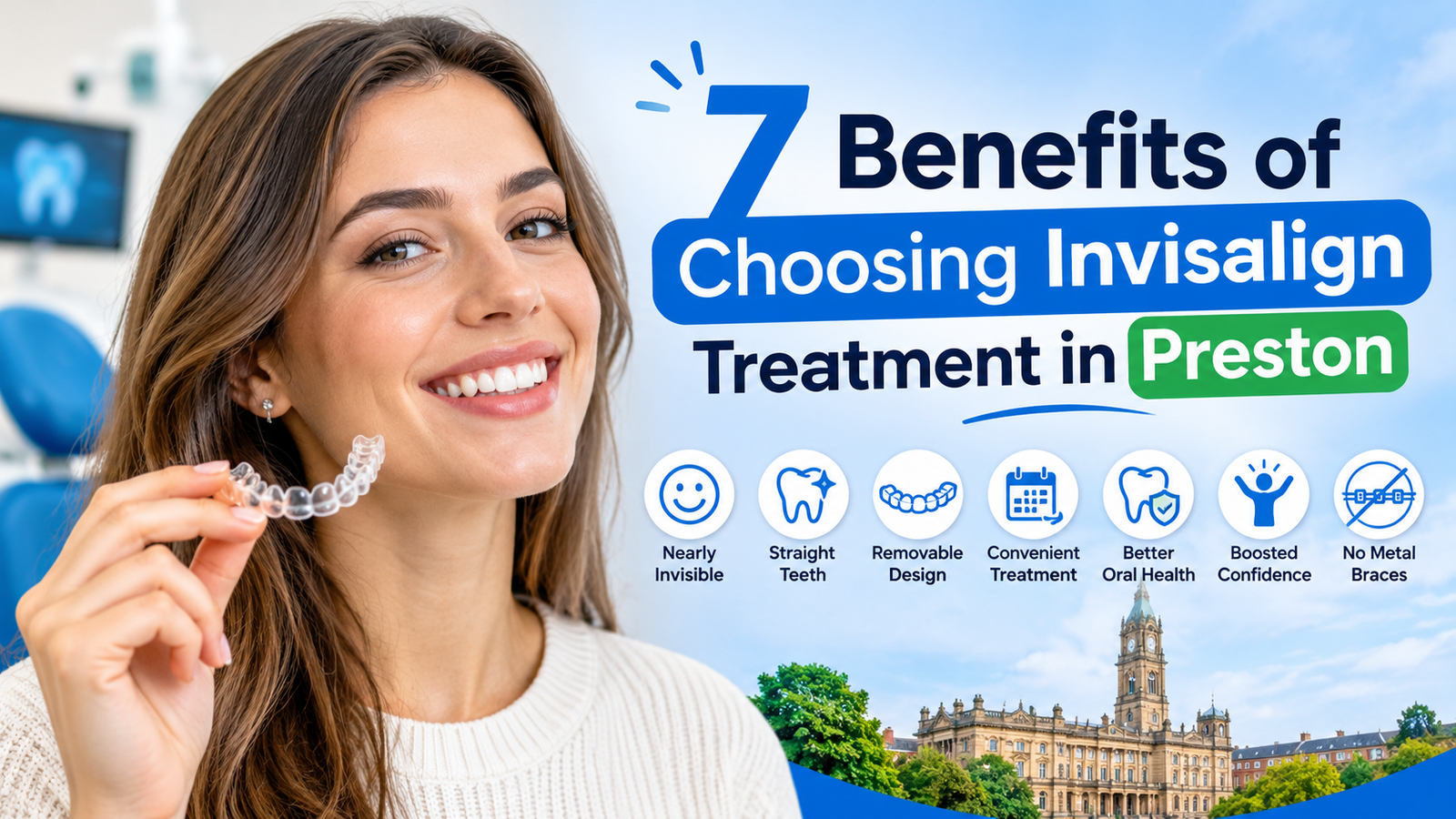
A straighter smile can improve more than just your appearance. Properly aligned teeth can make everyday activities such as chewing, speaking, and cleaning your teeth easier. However, many adults and teenagers hesitate to pursue orthodontic treatment because they do not want to wear noticeable metal braces. This is where clear aligner systems offer a practical alternative.
For people considering Invisalign Preston, understanding how the treatment works, what it can correct, and what to expect during the process can help make the decision easier. Invisalign uses a series of custom-made, transparent aligners to gradually move teeth into their planned positions. The treatment is designed around individual dental needs, making it a popular option for patients who want a more discreet approach to orthodontics.
If you are exploring ways to improve your smile, here are seven important benefits of choosing Invisalign treatment and some practical considerations to help you decide whether it is suitable.
How Does Invisalign Treatment Work?
Invisalign is an orthodontic system that uses removable, transparent plastic aligners instead of traditional fixed braces. Each aligner is designed to apply controlled pressure to specific teeth, gradually moving them according to a treatment plan prepared by a dental professional.
The process generally begins with a consultation and dental assessment. Your dentist evaluates your bite, tooth alignment, and overall oral health to determine whether clear aligners are appropriate. Digital scans or dental impressions may then be used to create a customized treatment plan.
Patients receive a series of aligners and wear each set for approximately one to two weeks, depending on their dentist’s instructions. Most treatment plans recommend wearing aligners for 20 to 22 hours daily. They should only be removed for eating, drinking anything other than water, and cleaning your teeth.
With consistent use and regular dental reviews, the aligners gradually guide your teeth toward their intended positions.
See also: When Cardiovascular Symptoms Require Specialist Assessment Rather Than General Care
7 Benefits of Choosing Invisalign Treatment in Preston
1. A More Discreet Way to Straighten Teeth
One of the biggest advantages of Invisalign is its nearly invisible appearance. The clear plastic aligners fit closely over your teeth, making them much less noticeable than conventional metal braces.
This can be particularly beneficial for working professionals, university students, and adults who regularly interact with clients or colleagues. For example, someone who frequently attends business meetings may feel more comfortable wearing transparent aligners than traditional braces.
Although aligners can still be visible at close range, they offer a considerably more subtle orthodontic option for people who prefer not to draw attention to their treatment.
2. Removable Aligners Offer Greater Flexibility
Traditional braces remain attached to your teeth throughout treatment. Invisalign aligners, however, can be removed when necessary.
This flexibility makes everyday activities more convenient. You can take them out before meals, enjoy your preferred foods, and brush and floss without working around brackets and wires.
For instance, if you have a family dinner or attend a special occasion, you can remove your aligners temporarily. However, it is important to maintain the recommended daily wearing time. Removing them too frequently can delay progress and affect treatment results.
3. Easier Oral Hygiene During Treatment
Maintaining good oral hygiene is essential during orthodontic treatment. Fixed braces can make cleaning difficult because food particles and plaque may collect around brackets and underneath wires.
Invisalign simplifies this process because the aligners can be removed before brushing and flossing. Patients can continue their usual cleaning routine without navigating around orthodontic hardware.
A practical routine involves brushing twice daily with fluoride toothpaste, flossing at least once a day, and cleaning your aligners according to your dentist’s instructions.
You should also rinse your mouth after meals before putting your aligners back in. This helps prevent food debris and sugars from becoming trapped against your teeth, reducing the risk of plaque buildup and tooth decay.
4. A More Comfortable Orthodontic Experience
Metal braces can sometimes cause irritation because brackets and wires rub against the inside of the cheeks and lips. Broken wires or loose brackets may also require additional dental appointments.
Invisalign aligners are manufactured from smooth plastic, which generally reduces the likelihood of soft-tissue irritation.
You may still experience temporary pressure or mild soreness when switching to a new aligner. This sensation is usually associated with the controlled force required to move teeth.
For example, the first few days after changing aligners may feel slightly uncomfortable, particularly when biting into firmer foods. This generally improves as your mouth adjusts to the new aligner.
5. Customized Treatment Based on Your Dental Needs
Every smile is different, so orthodontic treatment should reflect individual dental requirements. Invisalign uses digital treatment planning to map out the intended movement of your teeth.
Your dentist can assess specific alignment concerns, including crowded teeth, gaps, certain overbites, underbites, and crossbites. Depending on the complexity of the case, attachments or other orthodontic techniques may also be required.
Digital planning provides a visual representation of the anticipated stages of tooth movement. This helps patients understand the proposed treatment and discuss their expectations before starting.
However, the projected result is not a guarantee. Actual progress depends on biological factors, aligner wear, and how your teeth respond throughout treatment.
6. Fewer Dietary Restrictions
Food restrictions are a common inconvenience associated with traditional braces. Sticky sweets, hard candies, popcorn, and crunchy foods can damage brackets or become trapped between wires.
Since Invisalign aligners are removable, you do not have the same orthodontic restrictions while eating.
You can generally continue enjoying foods such as apples, nuts, sandwiches, and crunchy vegetables after removing your aligners. Nevertheless, you should always remove them before eating or drinking anything other than plain water.
Avoid eating while wearing aligners because chewing can damage or distort the plastic. After meals, clean your teeth before putting them back in.
7. Greater Confidence Throughout Everyday Life
Dental alignment can influence how people feel about their appearance. Some individuals avoid smiling in photographs, speaking confidently, or participating in social activities because they feel uncomfortable about crowded or uneven teeth.
Invisalign offers a discreet way to address these concerns while continuing normal daily activities.
For example, someone preparing for a wedding, professional presentation, or important social event may appreciate having an orthodontic option that is less visually noticeable.
Although improved confidence is a personal experience rather than a guaranteed treatment outcome, many patients value the ability to work toward a straighter smile without wearing prominent braces.
How to Get Started With Invisalign Treatment
Choosing clear aligners involves more than simply ordering a set of plastic trays. A professional assessment and a structured treatment plan are essential.
Follow these steps when considering treatment:
Step 1: Arrange an Initial Consultation
Discuss your concerns, dental history, and desired results with a qualified dental professional. Ask whether Invisalign is appropriate for your particular alignment issues.
Step 2: Complete a Dental Assessment
Your dentist will examine your teeth, gums, and bite. Existing dental problems, such as untreated cavities or gum disease, may need attention before orthodontic treatment begins.
Step 3: Review Your Treatment Plan
Discuss the estimated treatment duration, expected tooth movements, costs, and any additional procedures that may be necessary.
Step 4: Wear Your Aligners Consistently
Follow the recommended wearing schedule, usually 20 to 22 hours daily. Change aligners according to your dentist’s instructions rather than switching sets independently.
Step 5: Attend Follow-Up Appointments
Regular reviews allow your dentist to monitor progress, assess aligner fit, and make adjustments if necessary. Some patients may also require refinement aligners to achieve the planned outcome.
Common Mistakes to Avoid During Invisalign Treatment
Even a well-designed treatment plan can become less effective if patients do not follow the recommended instructions.
One common mistake is wearing aligners for fewer than the recommended daily hours. Inconsistent use can interfere with tooth movement and extend treatment time.
Another issue is drinking sugary beverages, coffee, or hot drinks while wearing aligners. These drinks can stain the plastic, expose teeth to sugar, or potentially distort the aligners.
Patients should also avoid cleaning aligners with hot water, as excessive heat can change their shape. Use the cleaning method recommended by your dental professional.
Finally, never skip follow-up appointments simply because your teeth appear to be improving. Your dentist needs to check that your bite and tooth movements are progressing as planned.
Expert Tips for Getting Better Results
A few simple habits can make your Invisalign experience more manageable.
- Use an aligner case: Store your trays safely whenever you remove them instead of wrapping them in tissues, where they can easily be lost.
- Maintain a consistent routine: Establish regular times for meals and cleaning to help meet your daily wearing target.
- Keep your aligners clean: Follow professional cleaning instructions to prevent unpleasant odors and discoloration.
- Plan ahead when traveling: Carry your current and previous aligner sets, a case, and oral hygiene supplies.
- Discuss discomfort early: Contact your dentist if an aligner causes significant pain, does not fit correctly, or develops damage.
These habits help maintain treatment consistency and reduce avoidable interruptions.
Conclusion
Invisalign provides an alternative to traditional braces for people who want to improve their dental alignment with greater discretion and flexibility. Its removable design, easier oral hygiene, customized treatment planning, and reduced dietary restrictions make it an appealing option for many patients.
However, successful treatment requires commitment, consistent aligner wear, and professional monitoring. Not every orthodontic case is suitable for clear aligners, so an individual dental assessment should always come first.
By understanding the benefits, limitations, and responsibilities involved, you can make a more informed decision about whether Invisalign is the right approach to achieving a healthier, straighter smile.