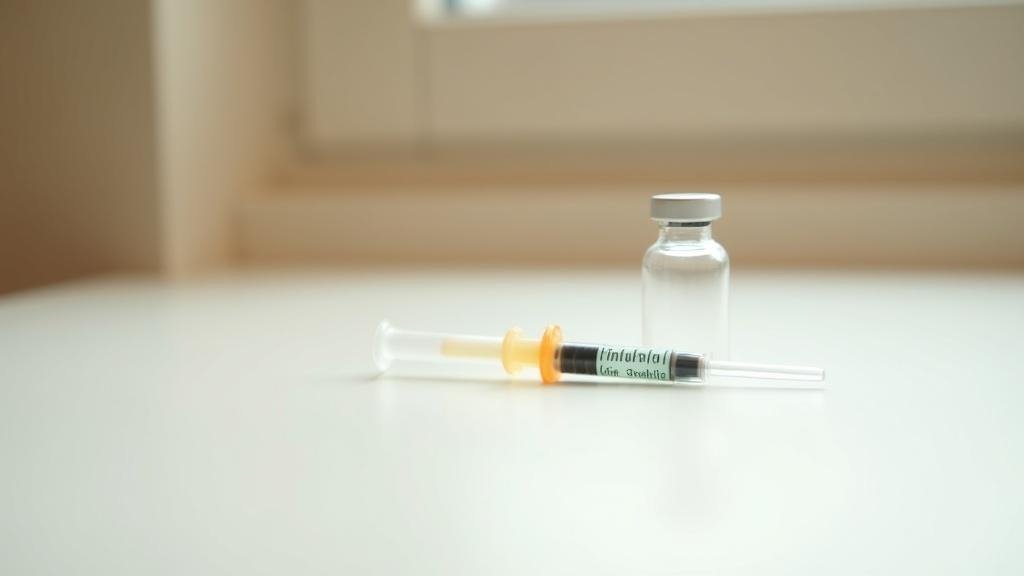
Peptide dosing tools earn their keep when they turn vial size, water volume, and prescribed dose into a syringe mark. That sounds basic until someone is staring at a 5 mg vial and trying not to confuse milligrams, micrograms, and units.
Below is a quick-reference table covering the main tools, then the full breakdown.
At a Glance
| Tool | Free | No Sign-up | Syringe Types | Peptide Presets | Math Visible | App Available |
| FormBlends Peptide Calculator | Yes | Yes | U-100, U-50, U-40 | Yes (BPC-157, TB-500, GLP-1, more) | Yes | Yes (iOS/Android) |
| PeptideFox | Yes | Yes | U-100 | 30+ peptides | Partial | No |
| MyPeptideMatch | Yes | Yes | U-100 | BPC-157, sema, tirze, TB-500 | No | No |
| LeadWest Medical | Yes | Yes | U-100 | BPC-157, retatrutide, ipamorelin, others | No | No |
| Outliyr | Yes | Yes | U-100 | BPC-157, TB-500, GHK-Cu, GLP-1 class | No | No |
| PeptideDeck | Yes | Yes | U-100 | Custom entry | No | No |
| peptidereconstitutecalculator.com | Yes | Yes | U-100 | BPC-157 only | No | No |
| Prime Peptides Calculator | Yes | Yes | U-100 | Limited | No | No |
| peptides.org Dosage Charts | Yes | Yes | N/A | Many | N/A (chart) | No |
| Reddit r/Peptides Wiki | Free | Account needed | N/A | Many | N/A (text) | No |
| General Injection Calculator (MD-Calc style) | Yes | Yes | U-100 | None | Partial | No |
1. FormBlends Peptide Calculator
This one earns the top spot for a specific reason: it shows you the arithmetic, not just the answer.
You type in the vial size (say, 5 mg of ipamorelin), how many mL of bacteriostatic water you added, and your per-injection target in mcg. It spits back the concentration per mL, the units to pull on your syringe, and the number of doses left in the vial. Simple. But what sets it apart is the step-by-step calculation displayed underneath the result. You can actually check the work, which matters when you are learning.
It handles U-100, U-50, and U-40 syringes, switching automatically. That is rare. Most web calculators assume U-100 and say nothing else. The mg-to-mcg conversion (1 mg = 1,000 mcg) is handled without you thinking about it, which matters because confusing those two units is the single most common dosing error with lyophilized peptides.
One-tap presets cover common vial sizes: BPC-157 at 5 mg and 10 mg, TB-500 at 5 mg, ipamorelin at 10 mg, tesamorelin at 2 mg, GLP-1 compounds at 50 mg. A visual syringe bar shows where your dose lands on the barrel. It also explains, in plain text, why adding more BAC water changes the units you draw without changing the total dose in the vial. That explanation alone prevents a lot of confusion.
The tool comes from FormBlends, a company that also runs a 503A compounding pharmacy. There is a company behind it. That matters when most alternatives are anonymous HTML pages. The mobile app (iOS and Android) pairs the calculator with a 55-compound reference library, dose logging, and an injection-site rotation map.
No sign-up. No cost.
2. PeptideFox
PeptideFox covers more than 30 named peptides and optimizes the BAC water volume suggestion so your draw lands on a clean unit mark. A visual guide walks through the syringe. Solid for people who want the tool to help choose water volume, not just confirm a number they already picked.
3. MyPeptideMatch
Free, no account, covers BPC-157, semaglutide, tirzepatide, and TB-500. GLP-1 coverage is a genuine differentiator. Straightforward output with no extra explanation.
4. LeadWest Medical
Covers a wider peptide list than most, including retatrutide, CJC-1295, sermorelin, GHK-Cu, and tesamorelin alongside the usual BPC-157 and TB-500. Good for someone working with newer GLP-1 adjacent compounds.
5. Outliyr
Outliyr is a wellness-oriented site with a peptide calculator embedded in a larger guide. It covers BPC-157, TB-500, ipamorelin, CJC-1295, tesamorelin, GHK-Cu, and GLP-1 class peptides. Useful if you also want surrounding context about peptide categories, though the calculator itself is basic.
6. PeptideDeck
PeptideDeck takes a manual-entry approach: type in mg, mL of BAC water, and target mcg. It outputs concentration and the volume to draw in both mL and insulin units. No presets, fully flexible.
7. peptidereconstitutecalculator.com
BPC-157 only. Converts mcg to U-100 units after you enter your reconstitution volume. Narrow scope, but if BPC-157 is your only concern it loads fast and works fine.
8. Prime Peptides Calculator
A vendor-hosted tool with basic reconstitution math. Limited peptide presets. Works for straightforward U-100 draws.
9. peptides.org Dosage Charts
Not an interactive calculator. Static reference charts covering a large number of compounds. Useful for cross-checking a starting dose range before you run the math yourself elsewhere.
10. Reddit r/Peptides Wiki
Community-maintained, frequently updated with practical notes that no corporate tool will include. Requires a Reddit account to save posts. Treat it as a cross-reference, not a primary calculator.
11. General Injection Volume Calculators (MD-Calc Style)
Several clinical calculators designed for dilution math can handle peptide reconstitution if you enter the values correctly. They show the formula. No peptide presets, no syringe visuals, but the underlying arithmetic is identical because reconstitution math does not change by compound.
One Formula Behind All of Them
Every tool on this list runs the same equation: concentration (mcg/mL) equals total peptide in vial divided by mL of BAC water added. Draw volume equals target dose divided by concentration. That is it. The tools differ in how much hand-holding they add around that core, which syringe types they support, and whether a real organization maintains them.
A note worth keeping: none of these tools tell you what dose to take. They only help you measure a dose your provider has already given you. The reconstitution math is a measurement problem. The dosing decision is a medical one.
Common Questions
Does adding more BAC water to a vial change the total peptide dose available?
No. The total peptide in the vial stays fixed. Adding more bacteriostatic water lowers the concentration, which means you draw a larger volume to hit the same mcg target. Tools like FormBlends and PeptideFox explicitly show this relationship, which is why checking your BAC water volume before calculating units matters every single time.
Can these calculators handle U-50 or U-40 syringes, or only U-100?
Most tools on this list assume U-100 and stop there. FormBlends is the only one reviewed here that switches automatically between U-100, U-50, and U-40. If you are using a U-50 syringe and run the math on a U-100-only tool, your drawn volume will be wrong by a factor of two, which is a serious error.
Why does PeptideFox suggest a specific BAC water volume rather than just accepting whatever I enter?
PeptideFox optimizes the water volume so your calculated draw lands on a whole or half unit mark on the syringe barrel. Partial unit marks are hard to read accurately. Choosing a water volume that produces a clean draw, say exactly 10 units rather than 8.3, reduces measurement error at the point of injection.
Is there a meaningful difference between using a vendor-hosted tool like Prime Peptides Calculator versus an independent one?
Vendor tools are maintained by companies selling peptides, which is worth knowing when you assess neutrality. They tend to cover fewer compounds and rarely show the underlying math. Independent or pharmacy-backed tools like FormBlends or the MD-Calc style general calculators have no product to sell through the result, so the output is less likely to be shaped by commercial interest.
If I only work with BPC-157, do I need anything beyond peptidereconstitutecalculator.com?
Probably not, assuming your syringe is U-100 and your provider has already given you a target dose in mcg. That tool is narrow by design. The one gap is that it does not explain the math or account for alternative syringe types, so if anything looks off you have no way to spot-check the result without doing the arithmetic by hand.
Sources
- U.S. Pharmacopeia general chapter on reconstitution of lyophilized drugs
- FDA guidance on insulin syringe unit markings (U-100, U-50, U-40 standards)
- peptides.org compound reference library (public, independent)
- PeptideFox.com tool documentation (public-facing, 2025)
- FormBlends mobile app listing, Apple App Store and Google Play (public, 2025)